Virtual Lubbock

by Chris Oglesby

Chris Oglesby_Interviews_Andy Eppler_October 17, 2007_via telephone; Andy at his home in LBK, author at his own in Austin Chris: Andy, the first time we met was at the party in Lubbock celebrating the first anniversary of my book, Fire in the Water, Earth in the Air: Legends of West Texas Music. You are twenty-two years old, so you were a fresh face there representing young Lubbock, the next generation of great musicians. I'm glad to have this opportunity to get to know you better. First of all, tell me about your roots in Lubbock. Andy: I was born and raised in Lubbock. My dad is a preacher and my mom is also in the ministry. My mom was born in Spokane, Washington, but my dad grew up in Lubbock and went to college here at Tech. His brother is Jim Eppler, who is a pretty popular artist here in West Texas and now all over the country._When I was growing up my parents worked at a church called Trinity, a big non-denominational church here in town, and now they work for a church called City View. We aren't hard-core Baptists or anything like that; I don't think I'd be here today if they were hard-core Baptists. I grew up in the church, playing worship music; and then I decided I actually wanted to make some money off my talent. I quit writing worship music and started writing what you would call secular music. My parents were very supportive of my playing music in the church. The older I got, the more I wanted to experiment with different types of songwriting, different sounds, and different ideas. I started realizing I could believe all the same things without feeling like I have to write in this tiny little box of church music. That was important for me, as an artist, to be able to branch out and write songs about bank robberies and stalkers and whatever other shit I write about now._Most of us up here in Lubbock have roots in the church. Kent Mings [of The Texas Belairs] was raised by his grandfather who was a preacher. Church is a pretty common theme through a lot of our lives. I am as Lubbock as you can get: my dad is a pastor and I've been playing music in bars for five or six years and still have not been noticed by much of anybody. Chris: Now, you say you've been playing in bars for five or six years…You are only twenty-two years old. Andy: Yeah, I started playing in bars when I was eighteen, and I started playing in coffee shops when I was sixteen. So when I was younger, I had the pleasure of having to sneak into my own gigs; that was just a real delight, to have the fear of being kicked out of your own gig and blackballed around town. But I couldn't play the songs I wanted to play in coffee shops. However, the way I dealt with the problem is that the instant I graduated from high school, I grew a beard by the next week. My family really has a handle on the trait for growing facial hair. I don't remember ever getting carded after that. Usually, they never even asked me how old I was when I booked the gig, because I looked twenty-four or so with the beard. One time, another guy who was opening for me and was the same age I was, he got carded and kicked out. He was good enough not to rat me out. I didn't take advantage by drinking because I wanted to have a good name around town. I wanted to be able to make two hundred dollars a night instead of just playing for tips in a coffee shop. _When people find out now that I am only twenty-two, they'll ask me about haven't I been playing in bars for years. And I reply, yeah, I guess I'm just a sneaky sumbitch. Chris: What are the venues there in Lubbock which have been friendly to you? Andy: Shooterz is not really typical of the type of places I usually play at but it is run really well and the people who work there are nice and cool. They've never screwed me over or taken advantage of me. On the rare occasion when something does happen, they always make it up to me. Another place is La Diosa, they've never done me wrong. But there are a couple of places in town where I absolutely will not play, and I am finally getting to the place where I can choose. If a place isn't run to where I can trust the management without making them sign a contract, then I won't play there. Fortunately, I do not play at places where I don't want to play, any more. But I wouldn't be where I am now if I hadn't started playing in bars when I was eighteen. Chris: So you're telling me about working with the management at the venue as opposed to the clientele at the venues; that's a pretty mature position to take. Have any venues been good to you as far as building a fan base? Andy: The only place where I have developed a real fan base is at a coffee shop called Sugar Brown's, and its all high school kids, like fourteen and fifteen years old. We have such a music culture in Lubbock, and a lot of the kids who really look up to musicians latched on to me and show up to every gig and pack the place. But that is the only place where I can really draw a crowd in Lubbock. _I can go to places like Taos or Boulder and can draw a crowd without having done any advertisement there. They like my music, and I sell a lot of CDs and get a lot of tips. Then I come back to Lubbock and a lot of people don't even know I am alive here. Chris: Why are you doing so well in these other places? What have you done differently there? Andy: I have no idea. I guess it's just a different mentality. Maybe they are more appreciative of the arts. When people go out in Taos, they are going to see art or listen to original music. Here in Lubbock, they just want to drink beer and listen to cover songs. That's fine because it can be fun. But my real problem in Lubbock is that I have yet to really find where I fit. _I was born and raised here. I am everything that Lubbock stands for: son of a preacher, playing music and pursuing art. Yet I can't really find where I am supposed to be in relation to Lubbock. _I can't really move away. My family is here and my heart is here. I don't want to leave. But Lubbock is almost forcing me to leave, because I am running out of places where it's worth it for me to play. Well, I've been playing four nights a week for the last year or so here in the west Texas area, a lot of that in Lubbock; so it's not that I've run out of places to play; I may have misspoken there. It's just that it is soul sucking to play songs to a full crowd, songs which you put you heart into, and after every songs there is dead silence. I put up with it because in my mind there are two hundred dollar bills sitting in the audience and they clap after every song. But it is soul sucking. Some times I come home and say, "I'm done with this. I don't want to play for these people any more."_The only guy who I feel like is coming to bat for me here in Lubbock is Don Caldwell. Don Caldwell is a good guy to have on your team, and he's really come out for me this past year. But other than that, it is kind of every man for himself. I don't know how musicians like Joe Ely or Tommy Hancock did it. They grew up in a different generation, and I wonder if there is just a generational difference? Is it really harder now that it was? Were there more opportunities then? Were people more willing to go out and listen to original music back then? Because it doesn't seem like anyone wants it now. Chris: I will make the point to you that, if you talk to Joe Ely about that, or to any of the other musicians from that generation, you will find that he was feeling exactly the same way you are. Tommy Hancock was a working musicians but it was because he was the house band at the Cotton Club, which was the biggest venue in town. So Tommy and his band were about the only working musicians in town. Several people who played with Tommy's band were not working musicians, including Buddy Holly's brothers Larry and Travis, and the Maines family; I'm talking about Lloyd's daddy and uncles. They weren't professional musicians; they all had day jobs and played music on the side. Joe Ely had some good gigs at Main Street Saloon and Fat Dawg's, but that's not where he made it big. Where Joe made it was England, touring Europe. Only after he got famous like that was he very popular in Lubbock. Andy: I am in the situation where I don't feel I can get a record contract, because I can't afford to sell all my songs to a record company, because the record companies are all fixing to go out of business. I can't use the record company to take me on tour in Europe to prove that I am something. I have to get over there on my own. And I honestly haven't figured out how to effectively do that. Chris: It does seem to me, though, that it's a good time to be where you are. For instance, you were able to record your new album pretty much all in your home, produced and designed the whole thing there in Lubbock, and that is a high quality piece of work. Joe Ely would not have had the ability to that back in his day. Tell me about making that record. Andy: The title of the CD is "There Is No Underground," and that is really a commentary on the fact that what we used to call the Underground Music Scene is really the music scene now. The stuff we all hear coming from the major record labels is such garbage these days, the only really enlightening and creative art is coming from independent artists who didn't sell their balls to the record company. _I really enjoyed making that record because I took it slow. It probably took me about six months to complete. At first, I was only going to have ten songs. Then I thought about twelve, because I have written between two hundred to three hundred songs to choose from. I have tons of songs but it comes down to picking not the songs I like but the ones which people at large seem to like. We finally decided on fourteen songs, and we were going to have "Lubbock TX" as a hidden track, because I wrote and recorded that song directly onto my laptop computer with a little synthesizer on the guitar to make it sound like it was on an amp, and the vocals were recorded into the built-in microphone in my laptop. That is as low budget as it gets. But I took it down to Acuff Studios and Alan Crossland made it sound all right. _"Lubbock TX" was originally going to be the hidden track but the more I played it live the more response it got. I thought, shit if I'm not careful that is going to be the single off the record, so I decided to give that song its own track. So "Lubbock TX" is the fifteenth song on the album. Chris: When you say "play it live," I assume you mean playing it locally there in Lubbock? Andy: Yeah. And it's a funny thing because the song is about being a musician in Lubbock and how horrible it can be. At the same time, it can be really fun and great when you get a good crowd but, man, most of the time it really hammers you. That is what the song is about. But because it has the words "Lubbock, Texas" in it, every time I play it the crowd goes nuts. _I opened for Cross Canadian Ragweed a few of weeks ago at the Lubbock Music Festival and there were about four thousand people in the streets of downtown Lubbock, crowded up at the front of the stage. I'm playing that song, and every time I say the words, "Lubbock, Texas" you see a wave through the crowd with everyone yelling. Apparently, they weren't listening to rest of the song. Because there were eight bands or so playing after that and none of them had a good crowd._Another thing: at the Lubbock Music Festival they had Cross Canadian Ragweed, a band from Oklahoma, come and play. Come on! With so many great artists in Lubbock, why do we need to go outsourcing for music? I think the bottom line is that the Lubbock crowd wouldn't come out to see a bunch of bands who are from Lubbock. That's part of the frustration; if you have some popular music to serve up on a spoon ready for them to slurp up, they'll like that but the Lubbock crowd is not interested in anyone local who doesn't already have a record deal. To be famous around Lubbock you have to go outside of Lubbock and get approval from some place that Lubbock people think is a big deal. Then you can come back and they will listen to you all of sudden. It's funny because I know that people down there in Austin think that Lubbock is a cool place for music but no one here does._I don't want to move to Austin but it sure seems like I am going to have to go somewhere and get approval from some place else. Opening up for Joe Ely at the Cactus Theater here in Lubbock and making friends with the Flatlanders certainly helped. That got me in the newspaper, and I am starting to be recognized a lot more around town. But they still won't come out to the shows. I didn't open for the Flatlanders but I did get to hang out backstage with them and visit. Somehow my name got in the paper for that event, too. _Sometimes I am just in the right place at the right time. But Don Caldwell has thrown me every bone I've been chewing on for the last six months. I have been chasing down radio stations across the country that will play my songs. I recently did an interview with a guy named Kevin McDonald, out of Seattle, and my music is starting to get out over there. It seems like I am pretty big deal everywhere else but Lubbock. It's kind of a strange paradox. Chris: If you could make a living distributing your music outside of Lubbock and still live there with your family, that could a nice situation for you. Cary Swinney has a good balance doing that; he barely markets his music there locally. Andy: That is a strange deal. I have been talking to Cary about all this, and I still can't figure out how he's gotten to where he is either. Chris: Part of it may be the quality of what he's doing. Cary has a definite style, and I think a lot of people connect with what he's putting out there. And I do think people are connecting with what you are doing, too. I am impressed that you are doing a lot of the work yourself. You have a good attitude for success. Andy: I am multi-faceted, as far as marketing. I do a lot of my own promotional stunts. For my CD release, I had Kenny Maines open for me, and Junior Vasquez opened, Andy Wilkinson opened, and Doctor Scoob, and Kent Mings, they all opened for me. We had a songwriter showcase and then I played. _Another thing I had thought about doing, marketing-wise for the CD release, was I was going to have an anonymous caller leak to the police that I was going to shoot off fireworks in the street, and when the police and the news show up its just free publicity. And then I would say, "I don't know where you ever heard that." Another stunt I actually tried to put together, but couldn't get it organized in time, was an angry Lubbock-ite bonfire of my CD; get a bunch of people together to call the news and say they are burning Andy Eppler's CD because they are so mad at him for some nebulous reason, and that could get national news coverage, a CD burning. It was a great idea but I just couldn't get it done in time for the release because I thought of it too late. And it was going to be in two waves. I was going to have everyone sign an agreement to where they couldn't talk about how it was organized for two months. Then after two months, when it had kind of faded away, they would all start telling that Andy Eppler planned the whole stunt, and then there would be a second wave of news coverage that I had screwed everybody. It was such a good idea. If I ever make another record, I am going to probably try it out. I just couldn't get it together in time because I thought of it too late._I designed a T-Shirt slogan: "Lubbock Texas - Where all the best musicians have to move from." When I have enough money to make Andy Eppler T-shirts, I am definitely going to use that one. I don't have enough cash right now to pay for producing the CD and making T-shirts in the same year. I hate to sound all cynical, because I love this town and I love the people here but it doesn't seem that they want what I got; at least not yet, anyway._I would love to go out and make a name for myself, then come back and live here, maybe have a house in New Mexico where I could get away occasionally. That would be the ultimate for me, to be accepted by this town I grew up in. But it's a glass shell I can't seem to break and I keep bumping my head up against it. Chris: I do want to encourage you to not feel as if you are alone. All those great musicians before you felt the same way. Nobody in Lubbock wanted to listen to Buddy Holly when he lived there. Natalie Maines never had any independent success in Lubbock. Most of the people I know who knew Natalie Maines before she was in the Dixie Chicks just remember her as Lloyd's daughter who worked at Orlando's Italian food and sang background vocals for the Groobees. That turned out good for Susan Gibson though. Lesson there is: Keep writing good songs and let anyone who wants to record them do so. Andy: I will let you know when there's a line. I would love it if people would offer to pay me money for not doing anything. Oh, you want to cut me a quarterly check so you can go around and do all the work? Yeah, that sounds okay to me. But nobody has really offered. And I don't think my songs are that universal. I do have a few that I think might be, but I don't think just anybody could play them. I don't think just anybody could pull off singing "C# Minor" which is the first song on the record. I don't think that is so universal to where just anybody could sing it. And my song "Bad Man," I think it takes a certain kind of asshole to play that kind of stuff, and I am that kind of asshole. Chris: What is your relationship with other musicians there in Lubbock? Is it a vibe where it's just you and a few other guys hold up in the house playing together, wondering what the hell everybody else is doing, while maybe there are a hundred other houses where the exact same thing is occurring? Andy: Honestly, in west Texas almost everybody plays guitar, so that's not hard to find. I had a couple different drummers I knew play and I even played some drums on the record. I only have three tracks where there are other musicians playing, all the other tracks, I played everything. People like Michael Vasquez, who is Junior Vasquez' son and a pretty good bass player, and Brian Tate played on it, some really great players. I did it right; I went to Scott Farris' studio here in town and asked him to record some drum tracks for me. Scott does design and art and has a sound recording studio called Amusement Park Studios. He also has worked out at South Plains College teaching classes in the commercial music program. We worked out a cash-list barter deal, where I did some things for him. Scott Farris did all the design, too. He gave me a pretty friendly fee. After the whole project was done, I had about a thousand copies in my house and had spent a total of about two thousand dollars._Anybody can do it. And that's a blessing and a curse. I wish more people were writing original stuff, because even if it sucks it is still something better than "Lady Lumps" or whatever that is. Chris: Why do you say it is a blessing and a curse to be able to make your own record? What is the curse and what is the blessing? Andy: The blessing is that you can make a record for not a bunch of money and sell it for fifteen bucks a pop, and actually make money by selling a record. Go figure, that used to be unheard of, to make money from record sales. Since any computer you buy now comes with some kind of recording software, all you have to do is buy a couple of mikes and learn to play guitar and you can put out a record. That's also the curse, however, because when people see you have a record they think, "Whatever. I could make a record." It really comes down to quality. But we've been so indoctrinated by this pop music machine that nobody knows what quality is any more. It is getting so bad that I wish it was the '90s. The '90s were so much better than what we've got going on the radio now. Chris: I agree, and the 90's were much more exciting than the 80's when I was in high school and college. Andy: That's because there was a lot of good music in the 70's, and then the 80s were shit, the 90's were good, now it's shit, and by 2010 I think they are going to be ready to listen to Andy Eppler, if I haven't killed myself. [Laughs] Chris: You are so young, Andy Eppler. Andy: I know, and that is about the only thing I got going for me. I have worked so hard at promoting myself, meeting the right people, and maintaining those relationships. My good friend Doug Haines, who goes by Doctor Scoob, recently moved to Austin. I still keep in touch with him because I think Lubbock musicians have to keep in touch so we can help each other. I try to mention Doctor Scoob in any interviews that I do because he was a huge influence on me. He was to me, probably what Tommy Hancock was to a bunch of those older guys; I know Tommy Hancock mentored Buddy Holly to a certain extent. Doug was that way for me. I was nineteen when I met him; we met because we had the same booking agent, who screwed us, along with Scott Farris and a couple of other guys in town. So, all the guys who that guy screwed, we all became really good friends. I am great friends with Scott Farris and Doctor Scoob now, so probably the best thing that has happened to me for my career was getting screwed by that booking agent. Because Scoob hooked me in to booking real gigs, not just opening for some band that nobody's ever heard of; he probably saved my career, as far as that goes. Chris: So you do all your own booking and promoting now? Andy: Oh yeah. I can't afford to pay anybody. Chris: Doctor Scoob played at the Lubbock Music Night which Jeff Kehoe and I had here in Austin a few weeks ago. I really enjoyed meeting and hanging out with him and his friend Fletcher who played mandolin and was kick-ass. That night, Scoob told me that he considers you to be a younger, better looking, more talented version of himself. Andy: [Laughs] That is probably pretty accurate. So Doug has made the move to Austin. There is a huge difference between the two towns, for sure; however, I have been even close to Austin only one time. My next move is to get on XM Satellite radio and then start trying to infiltrate Austin, Houston, and Dallas. _There is a magazine called Best In Texas, which I always saw around when I was in college at South Plains. I thought someday I would like to be on the cover of that, even though it probably isn't a big deal. But I would take it back to show to Cary Banks and say, "Yeah, who's a Maines Brother now?" That would be awesome. That wouldn't really make me a Maines Brother, but it would feel good. I have talked to Kenny about maybe him giving me an honorary Maines Brother card that I could push on people. Chris: You are a marketing genius, trying to attach yourself to the Maines family. Andy: Yeah, it would be cool publicity for them and really good for me. Chris: Have you ever met Natalie Maines? Andy: No. But I am good friends with Kenny and I have met Lloyd a few times. I even sent Lloyd my record, and I am sure it is in a very fancy trash bin right now. No, Lloyd is a good guy. I haven't heard back from him but it hasn't been that long ago and I haven't really been on his ass about getting back to me. I gave one to Joe Ely, too. I haven't heard back from him either, but his wife did say she likes it._I opened for Joe Ely back in July at the Cactus Theater, and then when the Flatlanders came to town I went backstage and hung out with them. Joe was real cool to me, and I think we kind of found each other's rhythm. Every time we've run into each other, he gives me a big handshake. I think if I were to hang around Joe any more we could be close friends. But I would like to say that about almost everybody. _I think the only reason I got the gig opening for him is because he knew my uncle Jim Eppler. But I think he thought that I was Jim's son, and I wasn't about to refute that because then I might lose the gig; so I made sure I had played my set before I mentioned to him that Jim is my uncle. Chris: What has been your uncle's response to what you are doing? Andy: He's just proud. He has always had faith in me. My whole family has been behind me in this process, and I think maybe a little bit surprised that I can make a living at it. I don't have another job. My wife and I do this only. We live below our income so we have a little extra on hand, trying to be responsible about it. But I really don't want to go back and dig ditches again. I put in sprinkler systems for parks and that is just about the most miserable job_My granddad used to say to me, "Get a degree even if it's in grass-picking." So I came to him one day and said, "Granddad, I got a degree and it's in commercial music." And he said, "Why didn't you get it in something useful, like grass-picking?" And I tell ya', he was right. He said to me, "If you're going to be a musician, you're going to end up digging ditches first." I thought I would just work hard at it and I did; but by God, I dug ditches first, and I don't know how he knew. I dug ditches for about a year and put up fences for awhile. I worked in a health food store for three years and I've flipped burgers. I mean, I've done it all. _I've never found another job that I like more than making art and showing it to people. Chris: You are good at it and obviously you have the spirit for it. Andy: I appreciate that. Coming from you, that's a pretty big compliment. I am just stoked to be getting interviewed by the guy who wrote the book on Lubbock music, you know? Chris: It's nice doing a fresh interview with new young talent. When you read my book, you see that most everybody has had the same troubles you have. I was listening to a Delaney & Bonnie record earlier today, with Bobby Keys playing along with Leon Russell and Eric Clapton. Keys told me the same stories as you, about having to wait in the kitchen of the place he's playing because he was not old enough to go into the venue with the band._Back to your new record, I am impressed with the variety and virtuosity of it. I don't like to use this word often because I think it has become cliché but I believe I am using it properly when I say that your record is eclectic. There are a lot of different things put together there. Andy: Thanks. Whenever people ask me how long I've been playing the guitar, I always say, "Long enough to be better than I am." Playing guitar is not really my thing; songwriting is my thing. But you can't just write lyrics any more, just write poetry. People want to hear the music that goes with it. _So I learned my C, G, D. _I do a little percussion and can play some bass because the notes are similar. I even mess with some piano. Most of what you hear on the CD is guitars and rhythm. No big surprises, no oboe solos are anything like that. But the songs all do sound different from each other. It's like if you're going to make a painting, you can't just use one brush. You need different textures and different shades so you get contrast. _I am not a folk artist; I am not a jazz artist. But I like jazz and folk. I like the way that jazz makes me feel. I like funk because I like to move and feel that groove. And I like simple solos. And I can do all that, so why not? I call myself a folk songwriter but it's pretty easy to call yourself that these days because "folk" has kind of lost its meaning. _I still play some old traditional folk songs in my shows, like "I'm gonna lay down my troubles down by the riverside." Because I grew up in the church, stuff like that really moves me. I think, "Yeah, I am going to lay down my burdens after this gig tonight because it stinks and I feel bad." Although it is hard to bitch when you're not digging ditches. But I figure that if those songs have lasted so long, then there is something to them, and if you can't figure out what that is, then you need to get out of this business because you don't understand music and how it affects people. I was just telling my wife that there is just something about a shuffle that makes you say "Yeah!" even if you don't like country music._The first two tapes I ever got…and its funny because in a way everything I have done since then has been a derivative of the mix of these two…I am almost embarrassed to tell you, it was Boyz 2 Men first tape and the Beach Boys greatest hits. All groovy fun stuff. I had those tapes for years because I couldn't afford a lot else. I also listened to Sting a lot. I don't listen to those tapes anymore but I think something got planted in me a long time ago, with big harmonies and interesting musical structures. I was probably more affected by Brian Wilson and the Beach Boys but Boyz 2 Men can still make me smile. Chris: We are about to run out of time, so is there anything else you would like to say about being a musician in Lubbock? Andy: I think that if you have any questions about what I think about being in Lubbock and all its pros and cons, listen to my CD and it will answer every question you have. As far as a definitive quote, I just think Lubbock needs to love its musicians as much as I think the musicians love Lubbock.
Daily Toreador

by Matt McGowen

Local musician releases second album of poetry Always wearing his trusty black beanie, local musician Andy Eppler embodies a new breed of West Texas artists. Beneath his beanie lies a mind teeming with unrestricted creativity as it sizzles through the processes of independent art - writing, performing, publishing and producing. And most of this, the 23-year-old said, he does solely on his laptop computer. After the success of "There is No Underground," his first album - which he released in 2007 and of which he said he sold more than 500 copies, not including sales on his Web site and iTunes - Eppler wanted to do something different, something experimental and something uncommon. In a manner true to Lubbock's Bohemian subculture, he hung up his guitar, picked up his pen and created his second album. Other than a handful of background guitar strums and subtle voice effects, Eppler's words stand alone throughout his yet-unreleased second album, "Dark Places." The album  consists of eight poems, two grim short stories and a startlingly unabashed self-awareness. "If I knew a local artist that was already doing music, I'd like to hear if they had something completely different going on, and, being an independent artist, I can put out anything I want," he said. "I decided to exercise that." Also, Eppler said he wanted to have a "departure" from music for his second album, which he plans to release on the Internet sometime during the next two months. While writing and compiling the poetry and prose for the album, he drew from personal experience. "Like anything I do, there's probably a piece of me in there," he said. "That's the great thing about art. All people of art are like that. Without meaning to, you write about something that, later on, you find significant." Growing up in Lubbock may have played a role in his choice to become a musician, Eppler said, though it is hard to say for sure. Undoubtedly, life in Lubbock drives people to play music, even if they are not embraced by the city at first, such as was the case of Buddy Holly. "Lubbock is so musically - if you're an artist or if you have an artistic temperament - everybody plays the guitar so they apply it to music," he said. "If you're an artistic person in Lubbock, the likelihood of you becoming a writer is substantially lower than of you becoming a musician, just because that's considered … the go-to mode of rebellion." Talent, alone, does not guarantee success for a musician, Eppler said. He spends a great deal of time performing. During what little free time he does have, Eppler works diligently to promote himself. "Drive" is a key component in the success of a musician. Since he was 16 years old, he said he has performed his music at coffee shops and eventually bars, where he had to "sneak into his own shows" because he was not yet 21 years old. Now, years later, Eppler earns enough money with his music to support himself. He said he wanted to experiment more with his creativity and release a recording of his other passion: writing. During the album's seventh track, "Paper and Pen," Eppler defines himself as "the point between paper and pen." Too much of today's music holds little artistic expression, he said. Most musicians of his generation write formulaic lyrics and produce albums infused with artificial effects. Such music offers little in the way of musical progress. "If you're going to make art," he said, "you might as well make it legitimate." For instance, the album's first short story, "The Abernathys," explores the emotional desperation that accompanies a loved one's death. Eppler said he wrote it not long after his wedding and the death of his grandfather, approximately 18 months ago. He said his writing necessarily does not mirror his life directly, but it does mirror his thoughts and his identity. Growing up as the son of a local preacher - a trait he finds remarkably common among Lubbock's musicians - he said he has had his struggles with his own spirituality and wanted to delve into those struggles through the album's second short story. As the album's 11-minute final track, "The Surgeons of Shadow" is a graphic account of sacrifice and suffering, good and evil. Through the album's poetry, Eppler said he also gives listeners a glimpse into how he feels about certain issues, ranging anywhere from the unsightly curtains in his living-room to his apathy toward politics. During the album's second poem, "Political Man," he gives a sarcastic and somewhat-scathing critique of politicians. "You fascinate me political man, how your miraculous mind in all its infinite capacity could hold so much truth and reason," Eppler's voice reads. "By what treachery and foolishness has it come to be that the world has not recognized you for the fountain of wisdom that you are?" The motivation behind "Dark Places" was not money, he said. He created the album to merely expand his horizons. Because he does not intend to sell the second album as much as he sold the first, he will not offer it in a hard copy. He will, however, sell it on iTunes. Eppler said he could not care less if people copy his albums and give them to each other for free. To him, a free exchange of his music promotes his live performances. "If I didn't sell any more CDs of ("There is No Underground"), and everyone just burned it, that would be totally fine with me," he said. "For me, it's a free commercial." Jessica Eppler, Andy's wife and a Sweetwater native whom he met while attending South Plains College, said she encouraged his decision to produce the spoken-word album, "Dark Places." "He has always written short stories and poetry and stuff, so I thought it was pretty cool," she said. "He just does his thing, and usually it turns out pretty cool." For a third album, Andy Eppler said he will record a live album during a series of planned performances in Austin. Also, Andy Eppler said he will soon try to publish a graphic novel that he has been working on. The graphic novel's premise is "Andy Eppler versus the pop-music machine." Agreeing that the graphic novel is another radical shift in his creative energies, he said it will just be another form of expression. "He's obviously very different," Jessica Eppler said. "I think he's just a creative person, and he just channels it out in a lot of different ways." Regardless of his medium of expression, Andy Eppler has one goal when he writes, sings, plays or designs. "To me," he said, "if you're not affecting anybody at the end of the day, what are you doing?”

Virtualubbock.com

by Chris Oglesby April 05, 2009 


Lubbock artist Andy Eppler has an amazing knack for producing albums which are musically creative and lyrically clever, and even more amazingly he does them all by himself, for the most part. From the notes on his newest CD Disease of the Heartland: "I wanted this album to be pure, raw, and uninfluenced by others. I enjoy making art alone. It's therapeutic." Andy Eppler is a true artist and keeps getting better with his fine do-it-yourself recordings. Disease of the Heartland may not cure what ails you but it will make you feel good.

Avalanche Journal

June 02, 2008 William Kerns

Andy Eppler places an extremely high premium on creativity. Having already released his first compact disc of original songs, titled "There Is No Underground," he no doubt surprised many by opting to make his sophomore release a spoken word album consisting of two short stories and eight poems. Don't look for it in stores. Do look for it. Instead, those interested are advised to head to the Internet, where they can buy induvidual tracks at usually frequented online locations such as napster and iTunes. Or you can soon just find directions at www.andyeppler.com. "I just want to be creative," said Eppler, 22, whose third project probably will be his original, 250-plus page graphic novel. Pushed to think farther ahead, Eppler spoke by telephone about a possible live album in the works - only this would include "crass joke songs" for an album he called the "Eppler Family Side Project." He is right on when he predicts that those songs' subject matter probably cannot make it into print. Eppler, a graduate of Coronado High School and South Plains College, knows that he can draw a crowd. He could do this interview only after completing another area concert tour, and said, "The checks I get from iTunes help pay the rent, but the live performances provide the bulk of my income." He added that "the joy" lies in writing. If asked what he does for a living, he says only, "I am a writer," not bothering to mention singer or recording artist. "I am just a creative person," he said. "I can appreciate that I am a singer-songwriter, but I know a lot of people can sing and play better than I do. As far as being a 22-year-old making my living only with music, I'm proud of where I am." Eppler owns poetry volumes by Alfred Lord Tennyson, Robert Frost and Robert Browning. He hasn't written that much private poetry but had enough already on hand that an album would not require much more work. He is aware that a "cult following" must be constructed to make a spoken word album pay off, and that can take years. On the other hand, such a project is far less expensive than recording music. "Besides," said Eppler, nobody reads books anymore. I listen to books on tape; I drive around and listen. Most of my generation cannot even read." He may have been half joking when he said, "I didn't drop out of school; I did the next best thing: I went to a junior college." Quite serious, he said, "I believe a lot of poetry is meant to be heard and not read." Eppler has shared his material with Steve Fromholz, Texas Poet Laureate. (It was Fromholz who told an Austin Chronicle reporter, "I don't intend to get a day job. I'm a professional entertainer - I do this for a living.") Texas poet and former Lubbockite Paul Bullock has given him complimentary feedback and critiques, said Eppler. The title of Eppler's spoken word album, to be released in mid-June, is "Dark Places." That's simply where Eppler said he was coming from during a "straight-through, three-month recording session." He also found out very quickly just how difficult recording any short story can be. He often started from scratch, so he could create a different voice for each character, utilizing a few effects, as well. He warned, "My stories are not about flowers and daisies." Consider his thought process concerning one story: "I grew up in a religious atmosphere, and so I figured that, as long as Jesus still dies at the end, it's not blasphemy. I did run it by my wife, who commented that it is a very violent story. But what I've done is take the Jesus story and amp it up. "What if the devil found out what Jesus was doing on the cross? What would he (the devil) do about it?" Eppler would state later, "You can tell a love story all day long, but it's not really a good story until someone dies or kills someone off." His goal, he said, is simply to help more people appreciate creativity, and he's not talking about the "pop cuture definition" - although he wouldn't mind if his spoken word project could win a Grammy. At the least, he appears intent on leading, not following.

Roots Time (Belgium)

May 27, 2009

Freddy Celis

Lubbock, Texas are the safe thuishaven of large artists (among other things Joe Ely) and also ours pivot in this discussiondiscussion discussion descend from this harbour in the deep south of America. Apparently this city is a heating nest of Americana and folk music music because also Andy fish Eppler eager in this musical vijvertje for the numbers on its third cd Disease in The Heartland. To be debut plate There is No Underground was room already a considerably successful album and the continuator Dark Places - `haunt word'- album - showed the poetic properties of this artist by means of poems and kortverhalen. For the new cd Andy Eppler for choose a combination of poetry and folk music music and that proves be a very succeeded choice. Its sterkte with words becomes apparent in several numbers of these still but person whose birthday it isperson whose birthday it is person whose birthday it is bandsman fully. With regard to instrumentation he tries keep it free sober with what jet ear or keyboards and seems the twelve numbers zowaar live on this cd have anticipated. Disease in The Heartland are thus absolute `do-it-yourself'- plate of Andy Eppler which in the cover note even indicates that he kindest in loneliness occupies himself, both in daily living and when he adds himself on music. That desolate situation sings he already in the first number on the cd horizon Road. bump thing A bump thing is zowat the most instrumentally complete song on this album and subject to what good will can be labelled as rock. Actress prayed concerning a considerable error will be run relation and about that go it still even further in the next song I'm Ready To Leave You Now in which an interludeinterlude interlude what musical alternation ensures. In I'Can't win flirt he with feelings of depression which call suicide inclinations in the sense I am getting myself ready for my charge sin. The most of songs seem as a matter of fact arise have been depressed-driven in a bui of and sad loneliness. For encouraging music you do not need be really at Andy Eppler. But from misery and desolation frequently, however, the most beautiful numbers arise. And it seems reflect us intention also its being move the auditor and him just as to do concerning the less gefortuneerden on this world. In this category certain The Loner and Young And Helpless belong. But Andy Eppler can make themselves also considerable angry concerning what there zoal wrong runs in this world. Songs as Stone House and You Ain't No cowboy accuses some wrong situations in the world. Ordinary man and the swinging clincher The Good man completes a pleasant album of a bandsman which has allicht still much in its top. We have been aroused curiosity with which project will unpack this dichter and song writer on a next plate. Only Andy Eppler will know that now already.

Avalanche Journal

May 18, 2009

William Kerns

It's not unusual for a number of impressive compact discs to emerge each season in West Texas, where one tends to notice production values as well as the simple musicianship. That's not the case with Andy Eppler's new recording called "Disease in the Heartland," a CD that, upon the first of many listenings, immediately forced me to sit up and pay better attention. This is Eppler's third recording, and it is by far his best. No one is going to confuse his work for slick detail. Rather, he is young, just 23, and hoping to make society notice by baring his soul while playing alone. "Disease in the Heartland" has only the simplest possible production values, simple attempts to layer guitar licks or add a bit of keyboards. It might as well be billed as a live album; it has that raw, honest feeling throughout. Shoot, there's even one point where Eppler catches himself when he almost comes back with a chorus repeat too soon. But his songs are so darn good, and Eppler's delivery is so consistently defiant that he is able to conjure believable characters via his lyrics. I've never heard Eppler play with another musician, much less with a band. His prior recordings worked only on a roller-coaster level, with songs a series of highs and lows. His preference for vocal repetition, carrying some songs longer than necessary, especially when performing live, still can prove aggravating. I mention that because Eppler takes huge strides in improving delivery decisions. He knows when to repeat a chorus and when to rely more on guitar, and he's not afraid to even include whispered surprises for fuller effect. His persona can indeed turn ugly, especially when faced with untruths. But only during part of "You Ain't No Cowboy" does he temporarily pass tasteful musical boundaries. Eppler doesn't need to be calling anyone names; his song already frames an everyday hypocrisy of "frat boys" who fail to realize that "being a cowboy is just a state of mind." For the most part, though, his songs on "Disease in the Heartland" are about far more serious issues, ranging from depression to deity. More than one sounds as though construction began in a dark, sad, lonely place. Here, that can describe a man's heart as much as his home studio. Witness a song in which Eppler wails, "I Can't Win," introducing a depression building to potential suicide: "I'm getting myself ready for my last sin." It is important, though, to remember that Eppler is a writer, one working in the creative arts. His goal is to touch the listener, and at times make him consider those less fortunate. In short, these are new songs, not news headlines. Eppler's liner notes explain, "I'd rather play alone. I wanted this album to be pure, raw and uninfluenced by others. I enjoy making art alone. It's therapeutic. I need to make art. I need to be understood." Eppler mentioned to The A-J that he "tried to capture my feelings about my homeland. ... What people outside West Texas don't realize is that, here on the plains, there is nothing on the horizon." "It's like being trapped under glass at the end of the world." He personalizes that trapped feeling in "Horizon Road," where he first informs us that our fathers "fell for the trap." And now he's bending his knees, being "fitted for chains." And where else but in "my prison, my home, my love on the plains," sings Eppler. Listeners may devise different interpretations, but when Eppler sings "Building a Building," it could be the revamped Buddy Holly Center, a church or just an allegorical look at a witnessed disturbing trend. "Don't come looking here for art, 'cause they canceled all the shows," Eppler sings. And for a second time, he finds himself in chains. There isn't anything at all allegorical about "Bad Actress." It is a musical illumination of a relationship gone bad. The song includes a beautiful chant of "Why Should I Stay?" - and, unexpectedly, Eppler closes with soft words that represent more truth, or perhaps unmet potential, than sadness. "I'm Ready to Leave You Now," by arriving next, could reasonably be mistaken for a coda instead of a new tune. Eppler's voice becomes a whisper when approaching the title. Which makes his ending much more startling when he brings the smack down and snaps to his lover, "I never quite unpack; you do your best convincing on your back." He wants blood here. Is this a sad album? Often. Is it depressing? It can be, depending on whether one embraces the lyrics. Frankly, one does get the impression that Eppler has had it up to here with hypocrisy in his homeland. He has become another angry young man, but unwilling to express that, a la Billy Joel, in pop tones. His vocals are excellent. And while his picking can be either hypnotic or too similar, one must admire Eppler's determination to make listeners care, or, better yet, make them think about their lives, direction and even those strangers they've made a daily habit of ignoring. He also juggles contemporary downtrodden with a Christ figure in "The Good Man." "The long road I am walking "Is so all of you can come. "Behold, I'm calling many, "But I'm only choosing some." This closing tale might very well have started as an epic poem before guitar was added. Eppler wrote all of the music and lyrics. He rehearsed the songs, and then recorded them, by himself in a room at home. The tunes are raw, yet equally sensitive and hurting. They work as an invitation to explore both brain and heart. The cure for Eppler's "Disease in the Heartland" may be the public's response to his words. This CD is a ferocious, challenging, individual step by a solo artist unwilling to play in a place where people won't listen. He recorded it alone in his room - and these songs may be best experienced the same way, with no distractions.

Alt Country Forum in The Netherlands

Johan Schoenmakers April 26, 2009

Andy Eppler - Disease In The Heartland Aanvankelijk had ik zo mijn twijfels hoe “Disease in the heartland” van Andy Eppler zou klinken. Ik ken hem niet en op de hoes ziet hij er uit als of ie is weggelopen uit de serie van “The Young Ones” als hippie Neil. Tja, wat zijn vooroordelen soms verkeerd. De klanken van Horizon Road” schallen uit de speakerboxen en merk ik dat ik hier te maken heb met een opmerkelijk singer songwriter, die niet zomaar zijn ding doet op de acoustische guitaar. Andy Eppler zou opgegroeid kunnen zijn in het zestiger jaren folk-protestzanger tijdperk. Andy heeft inmiddels 3 cd’s uitgebracht: Het in 2007 verschenen debuutcd “There is no underground”, “Dark Places” uit 2008 waarop geen liedjes stonden, maar Andy als korte verhalenverteller. En de laatstelijk verschenen “Disease in the heartland”. Andy lijkt een Loner te zijn, wil hij ons zeggen tijdens “The Loner”. Hij bewijst het maar eens te meer op zijn nieuwe cd door nagenoeg alles zelf te zingen (inclusief achtergrond vocalen) en te spelen. Andy Eppler en zijn nieuwe cd staan voor Rauw, Puurheid en hij wil vooral niet beïnvloedt zijn door anderen en tja op “Disease in the heartland” kan ik ook nergens een vergelijking met een andere artiest aanvoeren. Muzikaal steekt alles perfect in elkaar en de teksten zijn schitterend geschreven. Wat Eppler wilde met deze cd zijn gevoelens voor zijn woonplaats in West-texas over te brengen en het gevoel van die “Lonesome, West-Texas Wind”. De ene keer schreeuwt Andy het uit tijdens het uptempo “The Sale” waar ie zo stevig op zijn acoustische guitaar beukt dat het al mooi is dat alle snaren het nummer overleven. Dan weer gevoelig in het treurige “I’m ready to leave you now” en prachtig opbouwend van slow acoustische guitaar tot smerige elektrische guitaren in “I can’t win”, veelal voorzien van Eppler’s mooie achtergrondvokalen. Een meezinger koestert “Disease in the Heartland” ook in het “You ain’t no cowboy”. Ook al zie je eruit als een cowboy met je hoed en je strakke jeans, dan ben je het nog niet. Gedraag je als een cowboy is Andy’s statement. “Bad Actress” is een treurig liefdesliedje, ook al had Andy hem niet zo bedoeld. “Bad Actress” was meer bedoeld als antwoord op een gevoelige situatie. Dat is Andy Eppler ten voete uit. Kort en krachtige verhaaltjes, zijn doel om de waarheid te benadrukken. “Disease in the heartland” van Andy Eppler is in het genre van singer-songwriter gewoonweg een bescheiden wereldplaatje. Check deze opmerkelijke artiest uit, je zal niet bedrogen uitkomen.

Avalanche Journal

 by William Kerns

Before 2010 ends — and yes, I know, this is fairly last minute — I want to applaud a 10-song recording released earlier this year by the Prairie Scholars, called “Strangers in the Modern Era.”


I would advise you to buy it, but for the fact that you won’t find it in stores and fans most likely can download the tunes for free just by visiting the band’s web site at prairiescholars.com.


The album features the talents of Jessica and Andy Eppler, who stayed busy putting it all together back when they were also in the process of moving from Lubbock to Colorado.


Not tied to any labels, the married duo also is not tied to any rules, restrictions or musical traditions. Then again, Andy Eppler hasn’t had many nice things to say about mass-produced albums with label support, anyway.


While in Lubbock, Andy stood out not only as a gifted and prolific singer-songwriter, but an outspoken one, as well.


Some musicians may not have liked what he had to say, at times, but I’m guessing quite a few agreed with him 100 percent, but just didn’t feel that they could line up behind him.


Not yet anyway.


Consider, for example, Andy telling a South Plains College journalist, “You cannot call yourself an artist if you’re a cover band. You’re just a jukebox. I try to encourage people to support live music in all its forms, but let’s not call something art that isn’t.”


Wow.


Mind you, that is nothing he has not repeated over past years and, putting his money where his mouth is, originality is a prime ingredient in the musical meals created by Andy as a solo artist, and now Andy and Jessica as Prairie Scholars.


Neither is afraid to look within for inspiration, and the occasional chorus may even sound like a journal entry set to music.


Even so, “Strangers in the Modern Era” is a mixed and always entertaining bag of rock with folk and jazz influences.


Occasional profanity makes closing song “If You Don’t Feel Like Lovin’” a questionable inclusion. (Then again, for all I know, it could also become a popular sing-along at nightclubs. That does not change the fact that these Scholars have risen above this level.)


The proof of that lies in the preceding songs.


The Epplers met at South Plains College, but Jessica, a Sweetwater native, had paid prior dues singing rock with Clandestine Amigo. And her rock vocals help sell a tune called “The Gamble.” The song comes across as personal, and its message may have inspired the duo to drive 500 miles north.


At the same time, the secret to good songwriting is making listeners feel like you’ve also been peeking at their journals. And Jessica’s bitter vocals communicate the fear that, while she hates her job, she may be “running out of time” to make a change unless she takes an all-or-nothing risk.


On the other hand, what if she bets on the wrong hand, or the wrong man?


She sings of just that sort of recognition — “You can’t face me any more than I can face the truth” — on “Trouble.”


That’s not to say that romance takes a powder on “Strangers.” But the different forms of commitment found in these love songs range from giving up everything else (safety found after laying down even the cross in “You and Me Now”) or “Flying Down the Highway” together and still wondering if the ingredients for home and happiness will be recognized or inadvertently passed on by.


While themes are personal, both Andy and Jessica enjoy experimenting with varied styles and emotional pacing. In fact, the approach and message both are positively eerie on “Can I Hide in You,” a vision of regret in the mirror.


If the late Gary Cooper could rock out, the result might be “The Kelly Boys.”


Indeed, for sheer fun, Andy sings the role of the town sheriff in first person, and reminds us that movies such as “High Noon” were also about commitment, either to a woman or to a town.


Eppler could be referring to either when he sings “For you I do, with these rusty guns and these worn out hands.”


It is a cleverly written song, with the music growing more intense as one visualizes the gunfight reaching a zenith.


Andy Eppler’s songwriting and story-telling remain unpredictable, never more so than within one of my favorite songs, “The Open Road,” subtitled “Ballad of Ronnie and Darla.”


The composition opens in uplifting fashion; for gosh sakes, Eppler even delivers bluebirds singing before turning the title’s words into a lilting chorus.


And that lasts until one realizes that the singer is on that open road to track and murder the guy who stole his girl.


Victims may eventually change, though, with a memory first of being told specifically where to go, and the open road now repeating that he “must go.”


Every time I play this song, I like it a little more, in part because even the album’s more unusual songs speak to the power of the heart.


It will be interesting to see where the Epplers continue to take us, and which visual and literary works influence them in the process.

Virtual Lubbock

by Chris Oglesby

Several years ago, Lubbock native & now-expatriate Andy Eppler was frustrated by the audience reaction to a one-man show (he did have Nic Shute accompany on trumpet) which Eppler had performed in Austin, and which I had co-produced. He asked me if I had any advice for him. I know nothing about the music business but, with that caveat, I offered my impression. “Maybe you should try to perform with a band.” Eppler is a serious songwriter who prides himself on his craft, and he demands an audience’s attention, so he does not like to share the stage, I imagine. However, I explained many great songwriters augment their performances with great bands: Dylan, Springsteen, Ely.  He thanked me for the advice but I got the impression he dismissed it as the amateur advice it was, in fact.


Here’s the thing about Andy Eppler, Eppler is a one man band. Listen to his newest self-published CD “Long and Lonesome Way” (2011), which he describes as “fully actualized” re-workings of 12 of his favorite songs from his over 240 song catalog from the past ten years. When you hear this fantastic recording, the first thing you might think, “Damn, this man paid a lot of money for some top-notch session players. This band ROCKS.” Then read the liner-notes (yes, I still buy CDs because I like the liner notes), and you learn that Andy Eppler IS the band. With the exception of a few credits to guests Jessica Eppler (his wife & collaborator), Lubbock saxophonist Don Caldwell and singing legend Kenny Maines who contribute to Andy’s notorious classic song “(Why Don’t You Kiss Me) Lubbock, TX,” otherwise Andy Eppler plays EVERY instrument on this tight and thick, well-tuned collection of great indie-rock and folk-pop songs. Maines adds some hilarious new lyrics with his vocal backing to "Lubbock."


Eppler knows how to craft an excellent song in its entirety and record it with high quality. Eppler never ceases to amaze me with the apparent facility he has with a variety of instruments and with lyric and melody writing. Working alone is nothing new for Eppler. He always plays all the instruments on all his albums (excepting his “Prairie Scholars” side-projects with Jessica), and does his own background vocals. Every song on Eppler’s recent and diverse collection has groove, soul, style, wit, and bad-ass music. The harmonica, electric guitar, drums, organ, bass, they all are sublime and they are all tracks conceived, written, performed, laid down, and mixed by Andy Eppler. This amazes me. I want to compare him to Paul McCartney but that is more than what Andy’s ego needs, so don’t tell Eppler I said that.


Eppler is committed to making quality art, as he calls his work (it is art, in my opinion), that will stand up to critical acclaim and the test of time, and he is notoriously his own best promoter.  So Eppler  often asks me to write about him for virtualubbock. I am flattered he is a fan of the site.  I did interview him a few years back when he was still living in Lubbock (he and Jessica now live in Colorado; listen to “Lubbock, TX” and hear the appropriateness). But I don’t always have the time or inclination to write about Eppler every time he thinks I should. I mean, I don’t get paid for this or anything. I have to really feel it before I can write a story. However, after Eppler sent me “Long and Lonesome Way” and I had the chance to give a listen to these re-worked songs, I felt compelled to give him a few words and some well-deserved credit.  I heard a vast improvement to what I previously felt to be excellent Eppler songs in the first place. I like every song on this CD and I like them all better now. Sometimes I have felt Eppler’s  songs were a little long but now after listening to these great “fully actualized” versions on the new CD and I don’t want any of these songs to end.


Extremely well-done young man, I say to Eppler. Well done. You are truly one of Lubbock’s musical treasures. Now quit bugging me for awhile. Love you, bro.

12055710-writer-and-recording-artist-andy-eppler.jpg

Avalanche Journal

By William Kerns

Andy Eppler can be depended upon for a good quote and a good lyric.

Supporters and merely curious music lovers almost certainly will hear plenty of both when Eppler headlines a CD-release concert Saturday at the Tornado Gallery, 1822 Buddy Holly Ave.

Don’t be surprised if he performs all 12 original tunes from new recording “Long and Lonesome Way.”

A prolific composer who handles all of his recording on the home front, Eppler says he already has written and recorded about 240 songs.

His liner notes include, “I feel that I am ending a chapter in my life and beginning a new one, and so I wanted to record fully actualized versions of the songs that I feel have defined my art thus far.”

One thing has not changed. It doesn’t matter whether a composition offers a more concise statement or becomes a full-fledged story. Eppler finds a way to extend each effort regardless, taking off on instrumental tangents before always returning to the most defining stanza or chorus.

Even taking into account his commitment to rhyme, Eppler willingly juggles darker subjects and memories with the few songs that speak of relationships — whether with women, with the land and, at the end, with Lubbock.

Musically speaking, “The One That Got Away” is impossible not to like. Eppler speaks for many (and certainly beyond his age) when he opens with a philosophical look at those who wind up placing an early relationship on a later pedestal.

His view of women he became involved with later may strike some as harsh (he calls them “dirt”). And despite another terrific pop hook in his own “My Peggy Sue” chorus, this is one of many tunes speaking to the “lonely” in the CD title.


“But I let her go and I lost my direction,

Stumbling in the dark and the haze.

The rest are dirt compared to her perfection.

And how I wish I’d never let her go.”


Consider the darker character who arrives in “Maria,” which opens with, “Went through your mailbox/That’s how I learned your name.”

In fact, Eppler gives voice to a stalker, and the song becomes more eerie as the singer expresses feelings of betrayal while the chorus, which has a truly pleasant hook, is actually threatening if one listens closely.

I like to have lyrics in hand or nearby when listening to certain artists, including Eppler. He is a writer who consistently takes chances, but then, I also recall his quote: “You cannot call yourself an artist if you’re a cover band. You’re just a jukebox. ... Let’s not call something art that isn’t.”

Eppler’s “The First One Is Always Free,” for example, provides a rare danger within the traditional one-night stand, and a strange reason to treat every night like it may be your last.

He sings of a first and last date, given away with “Wrapped up in cellophane. in a bathtub of melting ice, All to escape the pain of a trespassing lover’s vice.”

Eppler is married to musician Jessica, who plays piano on two songs on “Long and Lonely Road.” But if one is seeking more traditional love songs, this CD refuses to play fair.

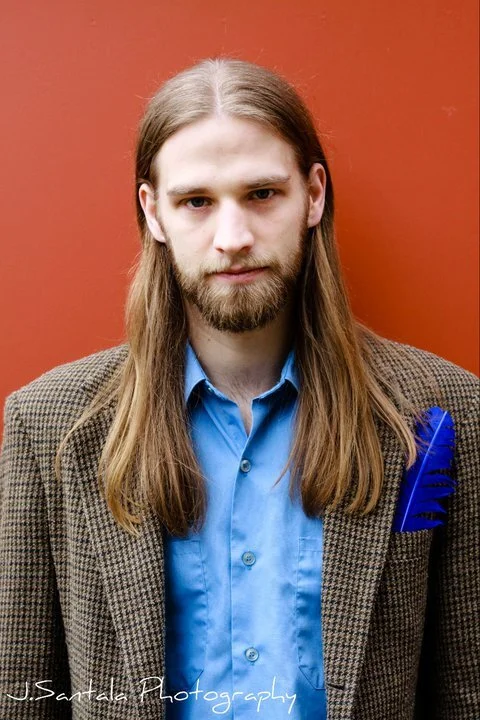
There is a reason the miniature figure on the CD’s cool cover, painted to resemble Eppler, is always seated alone.

The pace, the beat, the rhythm — these all differ. But on “Notion of a Mad Man,” Eppler makes the mistake of showing off vocabulary — really Andy, an acquiescent dream? — then defines lost love beautifully with such metaphors as “changing winds of springtime” and “hopelessness of fall.”

Smiles only inspire questions.

“I Don’t Believe” finds Eppler taking a stark vocal approach as the singer represents a person who needs to accept the loss of a cheating partner, while silently hoping she will come back.

I suppose “I’m No Devil” could be that one tune with a happier ending, provided sex is not mistaken for love. (“Forget the beginning and get with the sinnin’.”)

Changing moods, Eppler’s past success with “The Kelly Boys” comes to mind when he maintains his folk status with the comfortable delivery of folk-pop story song “Bad Man.” The cadence involves the listener, creating mental pictures at the same time.

The CD’s two biggest standouts are “Horizon Road” and “Lubbock, Texas.”

The former is the best written tune, partly because it is the least obvious. Eppler’s vocal arrangement commands attention while instrumentation is kept simple.

Once again, he forces listeners to take sides.

“Lubbock, Texas” might have been a kiss-off farewell from the singer-songwriter who felt he had earned more attention is his hometown, telling interviewer Chris Oglesby, ”I just think Lubbock needs to love its musicians as much as I think the musicians love Lubbock.”

Having decided to turn his own back on Lubbock, moving to Colorado, Eppler discovered his roots run surprisingly deep.

Early versions of “Lubbock, Texas” came across as bitter, a vocal last word by someone who sadly had concluded that musical respect in Lubbock was reserved for those named Maines, a reference to the Maines Brothers Band and Natalie Maines.

His decision to involve Don Caldwell and Kenny Maines in a final recording session grants the song a needed sense of humor, and clears away dark clouds to reveal a sing-along tune that leaves room for the city to one day respond when he musically asks, “Why don’t you kiss me, Lubbock, Texas?”

It’s a potential sing-along that will earn varied smiles, and a song that probably will make more people recognize Eppler’s name. Don’t think that wasn’t his intention all along.

photo by Jim Eppler

photo by Jim Eppler

Roots Time Magazine

Liedjes schrijven, liedjes zingen, gedichten schrijven, kortverhalen schrijven en producer spelen: Andy Eppler slaagt er in om als deze activiteiten te combineren en ze daarenboven ook nog succesvol uit te voeren.

 Lubbock, Texas was de plaats waar hij het levenslicht zag. Het is een relatief klein stadje met zo’n 200.000 inwoners waar grote singer-songwriters zich thuis voelen en het was bovendien ook de geboorteplaats van o.a. Buddy Holly en de favoriete stek van Delbert McClinton, Joe Ely, Butch Hancock en Jimmie Dale Gilmore (aka ‘The Flatlanders’).

Er moet dus iets extra muzikaals in het leidingwater van Lubbock zitten want ook Andy Eppler heeft er al een drietal soloplaten opgenomen gedurende de voorbije 5 jaar: “There Is No Underground” (2007), het ‘spoken word’-album “Dark Places” (2008) en “Disease In The Heartland” (2009).

Samen met zijn vrouwtje Jessica - die een muzikaal verleden heeft bij de groep ‘Clandestine Amigo’ - vormt hij daarnaast ook nog het muzikale duo ‘The Prairie Scholars’ en heeft hij een eerste plaat onder die groepsnaam gelanceerd met “Strangers In The Modern Era’.

Op dit conceptalbum brengen ‘The Prairie Scholars’ tien door het echtpaar samen gecomponeerde folk- en folkrocksongs die hij en Jessica met de nodige passie en liefde samen inzingen. Het centrale thema van deze plaat is ontgoocheling en de moeilijke zoektocht naar een definitieve verblijfplaats voor hun rusteloze jonge zielen.

Dat ze niet de ambitie hebben om via deze plaat rijk te worden mag blijken uit het feit dat de geïnteresseerde muziekliefhebber de gehele plaat gratis kan downloaden op hun website en de bijhorende, niet altijd erg opbeurende songteksten kan u vinden op de website 

Als we u tot slot nog enkele nummers extra mogen aanbevelen, dan raden we u aan om eens van naderbij te gaan luisteren naar “The Kelly Boys”, “You and Me Now”, “The Open Road (Ballad Of Ronnie And Darla)” en het slotnummer “If You Don’t Feel Like Lovin’”.

 “Strangers In The Modern Era” is alweer een erg leuk klinkende cd van dit jonge echtpaar dat beschikt over bakken vol talent. Het zal dan waarschijnlijk ook niet erg lang meer duren vooraleer ze opnieuw met een vers muzikaal project op de proppen zullen komen. We zien het graag tegemoet.

(valsam)

Liedjes schrijven, liedjes zingen, gedichten schrijven, kortverhalen schrijven en producer spelen: Andy Eppler slaagt er in om als deze activiteiten te combineren en ze daarenboven ook nog succesvol uit te voeren.
 Lubbock, Texas was de plaats waar hij het levenslicht zag. Het is een relatief klein stadje met zo’n 200.000 inwoners waar grote singer-songwriters zich thuis voelen en het was bovendien ook de geboorteplaats van o.a. Buddy Holly en de favoriete stek van Delbert McClinton, Joe Ely, Butch Hancock en Jimmie Dale Gilmore (aka ‘The Flatlanders’).
Er moet dus iets extra muzikaals in het leidingwater van Lubbock zitten want ook Andy Eppler heeft er al een drietal soloplaten opgenomen gedurende de voorbije 5 jaar: “There Is No Underground” (2007), het ‘spoken word’-album “Dark Places” (2008) en “Disease In The Heartland” (2009).
Samen met zijn vrouwtje Jessica - die een muzikaal verleden heeft bij de groep ‘Clandestine Amigo’ - vormt hij daarnaast ook nog het muzikale duo ‘The Prairie Scholars’ en heeft hij een eerste plaat onder die groepsnaam gelanceerd met “Strangers In The Modern Era’.
Op dit conceptalbum brengen ‘The Prairie Scholars’ tien door het echtpaar samen gecomponeerde folk- en folkrocksongs die hij en Jessica met de nodige passie en liefde samen inzingen. Het centrale thema van deze plaat is ontgoocheling en de moeilijke zoektocht naar een definitieve verblijfplaats voor hun rusteloze jonge zielen.
Dat ze niet de ambitie hebben om via deze plaat rijk te worden mag blijken uit het feit dat de geïnteresseerde muziekliefhebber de gehele plaat gratis kan downloaden op hun website en de bijhorende, niet altijd erg opbeurende songteksten kan u vinden op de website 
Als we u tot slot nog enkele nummers extra mogen aanbevelen, dan raden we u aan om eens van naderbij te gaan luisteren naar “The Kelly Boys”, “You and Me Now”, “The Open Road (Ballad Of Ronnie And Darla)” en het slotnummer “If You Don’t Feel Like Lovin’”.
 “Strangers In The Modern Era” is alweer een erg leuk klinkende cd van dit jonge echtpaar dat beschikt over bakken vol talent. Het zal dan waarschijnlijk ook niet erg lang meer duren vooraleer ze opnieuw met een vers muzikaal project op de proppen zullen komen. We zien het graag tegemoet.
(valsam)

Longmont Times Call

by Quentin Young

LONGMONT -- After the September flood, the local songwriter Andy Eppler was conflicted.

He wanted to write a song about the disaster, but -- to use the political phrase -- he was worried about the optics.

"At first I wanted to write a song and console the community in some way, but then I thought it might seem opportunistic," he said.

He aired his ambivalence on Facebook, and someone commented with a suggestion that he thought was a good one.

"Someone said you could donate the proceeds to the community, and that became the idea," he said.

Andy and his wife, Jessica, are known as The Prairie Scholars, a duo, and lately a full band, from Longmont that plays throughout the region. The couple, full-time musicians, didn't lose property in the flood, but they know musicians who did, and they lost gigs in the wake of the devastation.

Jessica was moved by the community cooperation she saw after the flood.

"It really was beautiful seeing so many volunteers," she said.

The song Andy and Jessica wrote is called "100 Year Flood," and it's available for download for $2.98 from their website, prairiescholars.com. All proceeds go to the Longmont Community Foundation for local flood relief, Jessica said.

The two wrote, recorded and released the song in only about three weeks. They feel thankful to be able to put their skills toward helping the community, Jessica said.

"People are being helped," she said.

The Prairie Scholars have been community boosters ever since they arrived from their native Texas several years ago. They put together a book with coupons good at their favorite local businesses, and they give the books away at gigs in other communities.

"The hope is that it will bring new business to some of the companies that we love," Andy said.

The couple also recently released a solo album by Jessica, called "Planted in the Wind," and a new Prairie Scholars album, called "Wasted Tracks." Those recordings also are available as downloads from the band's website.